
Process and technology advisory for transport and logistics operations
A shipment can be visible in a transport system while the work around it remains difficult to coordinate. A customer asks for an update. Operations needs information from a subcontractor. Finance needs evidence before billing. The same exception moves between inboxes without a shared view of what happens next.
DSV Consulting helps Australian transport and logistics businesses review those handoffs and the systems that support them. We focus on process ownership, information quality, software decisions and a realistic path from diagnosis to implementation.
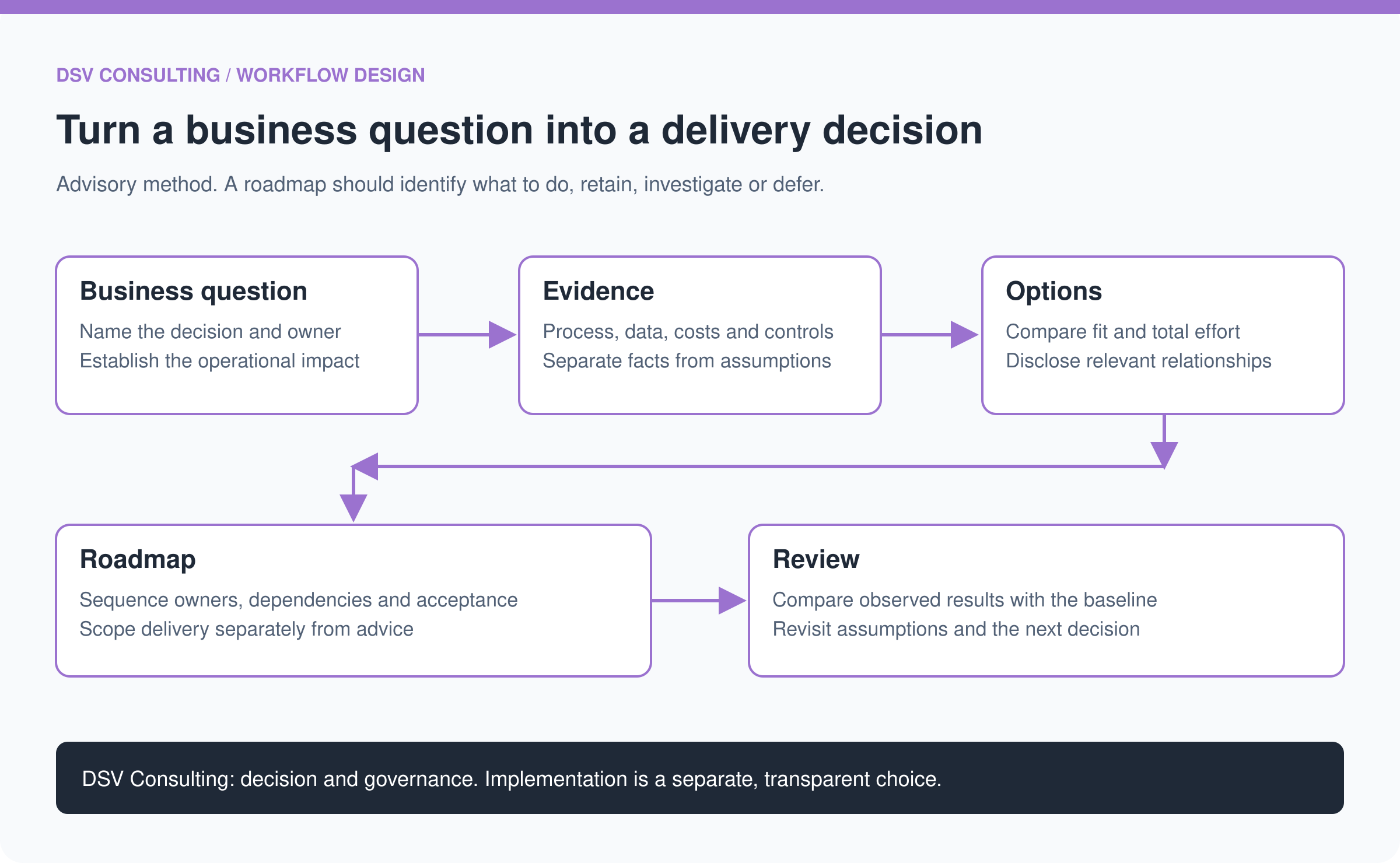
Follow one job through the operation
A useful review traces a representative job from customer request through planning, execution, exception handling and commercial close. It identifies the people, records and decisions involved at each stage. The aim is to understand the work around the system, not only the screens inside it.
Include exceptions as well as completed jobs. Missing information, changed instructions and disputed charges may reveal more about operational coordination than a standard transaction that moved through without intervention.
Questions the review can address
Where do handoffs lose visibility?
Identify when responsibility moves between customer service, planners, operational teams, partners and finance. Establish what information is required and how the receiving team knows it is ready. An escalation rule should name an owner and a next step, not simply copy more people into an email.
Which information can management trust?
Define important measures and trace them to their sources. Distinguish transport events, service commitments, billing records and management adjustments. Reports need agreed periods and exclusions before they can support a useful discussion about performance.
What is the role of each application?
Map the transport, warehouse, customer, finance and reporting tools actually used. Identify duplication and manual transfers. A proposed replacement needs to account for interfaces, data history and operational continuity, not just compare feature lists.
Where could automation help?
Look for repeat work with a clear trigger, reliable information and a defined action. Some tasks may suit rules or integration. Others may support AI assistance with human review. The decision follows the process and the consequence of an error.
An illustrative exception workflow
Consider a delivery exception that requires information from a subcontractor before customer service can respond. A review would examine how the issue is recorded, who owns the next action, where evidence is stored and how the customer receives an update.
A proposed future process might connect those responsibilities through the existing operational systems, with escalation when the required information is missing. This is an illustrative design discussion, not a published client case or a claim that a particular result has already been achieved.
Link the process with the economics
Repeated coordination creates effort, but its financial effect needs evidence. Establish the frequency, time and commercial consequences of the selected problem. Distinguish released staff capacity from expenditure that can actually be removed.
For software changes, include migration, integration, training and support in the comparison. A lower licence price may not reduce total operating cost if staff must recreate a missing workflow manually or maintain additional interfaces.
Review data and AI readiness together
A customer-facing assistant needs current and authorised information. A reporting initiative needs consistent event and commercial definitions. Both depend on source quality and ownership. The review should establish these requirements before recommending a data platform or autonomous agent.
Where AI is considered, define what it can retrieve, suggest and execute. Exceptions involving disputes, sensitive information or unclear instructions may need human judgement. Evaluation should use representative scenarios from the proposed scope under an approved information-handling arrangement.
A practical set of outputs
The engagement can produce an end-to-end process map, exception and ownership analysis, application and data view, prioritised opportunities and a sequenced roadmap. Each recommendation should identify the business owner, dependencies and evidence needed to approve implementation.
Some improvements may involve procedures or clearer responsibilities. Others may require configuration, integration or custom development. The roadmap should make those distinctions explicit and avoid turning every operational issue into a software purchase.
Work with the people who keep the operation moving
Involve operational leaders, frontline staff, customer service, finance and technology owners as appropriate to the scope. Validate proposed changes against real exceptions and operating constraints. A future-state design must be usable during busy periods, not only in a workshop.
DSV Consulting is part of a group with technology delivery capabilities. Relevant relationships are disclosed, and implementation can be separately scoped with your team or an appointed provider. The advisory work should help you make that choice with clearer requirements.
Frequently asked questions
Do you implement transport or warehouse management systems?
This page describes process and technology advisory. A review can establish requirements and compare implementation options, but a specific system deployment requires a separate scope and capability assessment. We do not claim certification in every transport or warehouse platform. Relevant supplier expertise and integration constraints should be verified before a delivery commitment is made.
Can you review exception handling without replacing our systems?
Yes. The problem may involve ownership, information requirements or coordination rather than a platform gap. We trace representative exceptions and identify practical improvements. Some changes can use existing features or procedures. A replacement should be considered only when the evidence and operating implications justify it within the business's priorities and constraints.
Are the examples on this page real client results?
The exception workflow is explicitly illustrative. It shows the type of process the advisory service can examine, not an outcome already delivered for a named or anonymous logistics client. A client case should only be published with approved scope, evidence and permission. We do not substitute automotive delivery evidence for a logistics reference.
Can AI help with customer updates and document handling?
Potentially, where the information is reliable, access is appropriate and the task has clear boundaries. Some needs may be addressed more simply through integration or rules. We assess the proposed workflow and consequences of error. Customer communications and operational actions should include suitable review, escalation and evaluation before automation is expanded.
How do you evaluate a proposed software change?
Compare business requirements, interfaces, data migration, operating continuity, adoption and total cost. Include internal effort and ongoing support, not only the supplier's licence price. The review should identify assumptions that need validation and the people who approve them. A demonstration is useful evidence, but it does not establish production fit on its own.
Can you improve the consistency of our reporting?
We can review how important measures are defined, sourced and reconciled. Differences may arise from event timing, exclusions, commercial adjustments or manual transfers. The first task is to establish a common definition and ownership. Reporting implementation can then be scoped against that agreement, with appropriate freshness, access and exception handling requirements.
Who should be involved from our business?
The sponsor should involve the operational, customer-service, finance and technology owners relevant to the selected process. Frontline examples help validate how work actually happens. Partners or suppliers may be needed for specific dependencies. We agree participation and evidence requirements upfront so the review produces recommendations that can work in the operating environment.
What is a sensible first engagement?
Choose one recurring problem with a clear owner and enough examples to investigate, such as an exception handoff or a reconciliation issue. Define the decision the review must support. A focused diagnostic can establish the process, dependencies and next steps before the business commits to a wider transformation or platform implementation programme.
Start with one recurring exception
Bring a process that repeatedly needs chasing, manual reconciliation or management escalation. We can define a focused review and the information needed to decide whether a process change, an integration or a broader programme is justified.
Discuss a logistics process review